The Gift Nobody Asked For: When Your Worst Night Onstage Changed Someone Else's Life
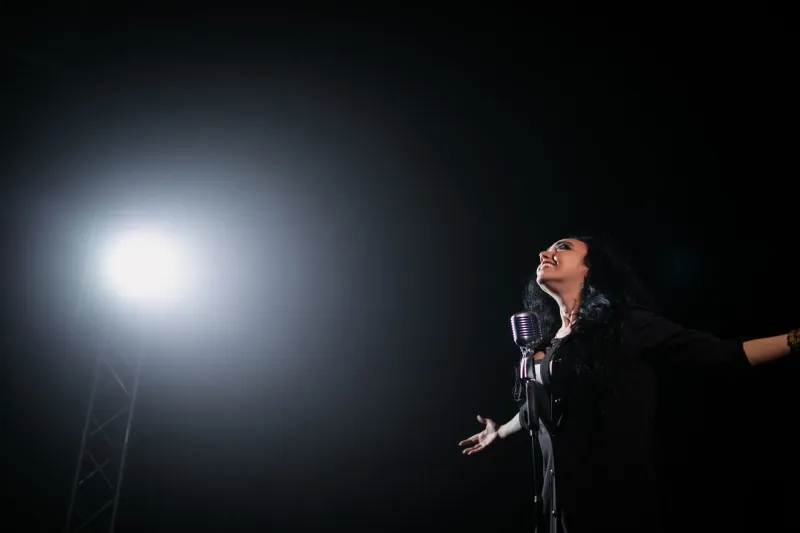
There's a particular kind of silence that follows a performance going wrong. Not the comfortable quiet of a crowd holding its breath — the other kind. The kind where you can hear someone cough three rows back and suddenly you're hyper-aware that every single person in the room knows exactly what's happening. You know it. They know it. And somehow, in that shared recognition of a creative disaster, something unexpected occasionally takes root.
Because here's the thing nobody tells you when you're picking yourself up off that metaphorical floor: somebody in that audience might have just had their entire understanding of performance rewritten.
What Polished Work Can't Teach
We spend so much energy chasing the perfect show. The seamless transitions, the hit notes, the timing that lands like clockwork. And that pursuit isn't wrong — craft matters, preparation matters, showing up ready matters. But a flawless performance, for all its beauty, can sometimes function like a closed door. You admire it. You appreciate it. You might even be moved by it. But you don't necessarily learn from it, at least not in any way that sticks to your ribs.
Flawed performances work differently. When something breaks open onstage — when a performer loses their thread, when the emotion spills past the container of the material, when the technical execution stumbles and the human being underneath is suddenly, nakedly visible — audiences pay attention in a completely different register. The analytical part of the brain wakes up. The empathetic part goes into overdrive. And if you're a performer watching from the wings or the third row, you start absorbing information you couldn't have gotten from a highlight reel.
Actress and acting coach Renata Fuentes, who has worked in regional theater across the Midwest for over fifteen years, puts it plainly: "The performances I've learned the most from were not the ones I walked out of feeling like I'd witnessed something perfect. They were the ones where I watched someone fight for something and not quite get there. That struggle taught me more about what acting actually is than a hundred great shows."
The Ripple You Never See Coming
Most performers who've had a genuinely rough night don't think of it as a contribution to the art form. They think of it as something to survive, process, and hopefully forget. The idea that their stumble might have set something in motion for someone else in the room rarely crosses their mind.
But ask around in creative communities — theater companies, comedy clubs, dance studios, music conservatories — and you'll hear versions of the same story repeated with surprising frequency. Someone witnessed a performance that went sideways. Something about that imperfection cracked them open. They left the room different.
Drummer and bandleader Marcus Teel recalls watching a jazz performance in Chicago years ago where the pianist, a well-regarded local musician, had what he describes as "a complete unraveling" during a late-night set. "He lost the structure of what he was playing, and instead of stopping, he just... kept going. It turned into something else entirely. Something honest and kind of terrifying. I drove home that night rethinking everything I thought I knew about control in music." Marcus now teaches a workshop specifically about the creative value of musical mistakes — tracing its origins directly back to that uncomfortable evening.
Vulnerability as Curriculum
There's a reason acting teachers, comedians, and performance coaches across the country keep circling back to the concept of vulnerability. Not because failure is aspirational, but because genuine vulnerability — the unguarded, unpolished version of a human being trying to do something hard — communicates on a frequency that technical mastery simply doesn't access.
When an audience sees a performer struggling and continuing anyway, it does something to them. It gives permission. It says: this is hard for everyone, and doing it anyway is the whole point. For a young performer watching from the seats, that message can be more clarifying than years of formal training.
Comedian and storyteller Bex Holloway, who performs regularly on the East Coast club circuit, describes watching a veteran stand-up bomb during what should have been a triumphant hometown set. "The crowd turned on him fast. It was brutal. But he didn't panic. He just... stayed present and kept working. He didn't get them back that night, but watching him refuse to collapse taught me something about resilience that I genuinely couldn't have learned any other way. I think about that set constantly."
The Accidental Curriculum
What makes this phenomenon so interesting is how unintentional it is. The performer in question rarely knows they've become someone's masterclass. They're too busy dealing with the aftermath — the self-doubt, the post-show spiral, the replaying of every moment that went wrong. The teaching happens entirely without their consent or awareness.
In some ways, that's what makes it so pure. There's no performance of authenticity here, no carefully curated vulnerability designed to seem relatable. It's just a person, trying something, in front of other people, and not succeeding — and that raw reality turns out to be exactly what someone else needed to see.
This doesn't mean artists should aim to fail, or that preparation is overrated. The performers who tend to generate these accidental lessons are usually ones who've done the work and are genuinely reaching for something difficult. The stumble is meaningful precisely because the attempt was real.
What to Do With This
If you've ever had a performance you'd rather forget, here's something worth sitting with: you don't get to know the full story of what you put into the room that night. The audience you think you let down might include someone who walked out quietly changed. The creative disaster you've been replaying for months might have planted something in a younger performer that will take years to fully grow.
And if you've ever watched a performance that fell apart — if you've been in the room when something broke open — pay attention to what you took away from it. Chances are it's still in there somewhere, informing how you work, how you think about risk, how you understand what it means to keep going.
The worst nights have a way of teaching the best lessons. Just not always to the person who lived through them.