Killing Your Darlings: The Brutal Art of Letting a Great Performance Stay Dead

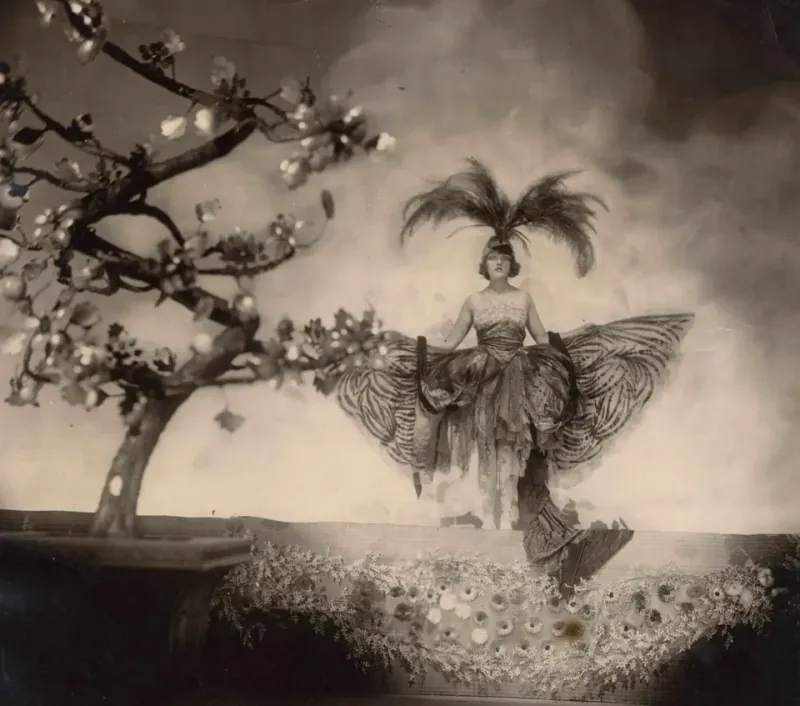
Photo: Anthony Sertel Dean, CC BY-SA 4.0, via Wikimedia Commons
There's a version of success that becomes its own kind of trap.
You've done the work. You've built the piece, refined it through dozens of performances, and finally — finally — you've watched it land exactly the way you always hoped it would. The audience remembers it. Critics remember it. You remember it in that deep, cellular way that only happens when something truly connects. And then, almost immediately, the pressure starts. Bring it back. Do it again. Give the people what they loved.
It's one of the quietest dilemmas in any performer's life, and it doesn't get talked about nearly enough.
The Success That Follows You Home
Ask almost any working artist and they'll tell you about the piece that won't let them go — not because they're still attached to it, but because everyone else is. A comedian who built a tight fifteen-minute set around a specific chapter of their life. A theater performer whose one-person show about grief ran off-Broadway and left audiences in tears. A musician who wrote a song during a dark period that now gets requested at every single show, years after they've moved on.
The piece becomes a landmark. And landmarks, by definition, don't move.
What's rarely discussed is how the gravitational pull of a past success can quietly distort everything that comes after it. When an artist keeps returning to the well — reviving the show, re-recording the song, reprising the role — they're not just performing a piece of work. They're making a statement about where they believe their value lives. And audiences, who are more perceptive than performers sometimes give them credit for, pick up on that signal.
When Revival Becomes Retreat
There's a meaningful difference between honoring your catalog and hiding inside it.
Some revivals are genuinely additive. A performer who revisits an old work with new life experience, a different cast, or a deliberately updated lens can create something that enriches both the original and the new version. That kind of return takes courage and intention. It asks: what does this piece mean now, and does that meaning justify bringing it back?
But a lot of revivals don't come from that place. They come from fear.
Fear that the next thing won't be as good. Fear that the audience who showed up for the old work won't follow you into new territory. Fear that the applause you earned once was somehow a fluke, and the safest move is to keep proving it wasn't. That kind of revival isn't artistic — it's self-protection dressed up as nostalgia.
The performers who build genuinely durable careers tend to be the ones who recognize that distinction early. They understand that finishing something — really finishing it, letting it be complete — is its own form of artistic confidence.
What Staying Gone Actually Does for a Legacy
Here's the counterintuitive thing about letting a great piece rest: it often makes the work more powerful over time, not less.
When a performance isn't constantly being revived and repackaged, it starts to take on a kind of mythic quality in the minds of the people who experienced it. It becomes something that existed in a specific moment, fully and completely, and then was allowed to stay there. That's rare. And rarity, in the performing arts, tends to age very well.
Think about the shows that ran for a single, legendary season and closed on their own terms. The concerts that were never recorded. The performances that exist only in the memories of the people who were in the room. There's a reason those experiences get talked about the way they do — not just with fondness, but with something closer to reverence. The fact that you can't go back and see them again is part of what makes them matter.
Contrast that with the artist who keeps pulling out the same beloved piece every few years, each revival a little more polished and a little less alive than the one before. At some point, the work stops being a performance and starts being a tribute to a performance. The distinction is small but devastating.
The Permission to Move Forward
Letting go of a past success isn't just about protecting the work's legacy. It's also about protecting the artist's ability to keep growing.
Creative evolution requires a certain amount of space — space to be uncertain, to try things that might not work, to show up as a different version of yourself than the one audiences fell in love with. That space is almost impossible to maintain when you're tethered to something that worked before. The pull toward the familiar is too strong, and the pressure to replicate previous success is too loud.
The performers who give themselves permission to leave their best work behind — to say, essentially, that chapter is done — are the ones who tend to keep making interesting work decades into their careers. They stay curious because they have to. There's no safety net of a beloved back catalog to fall back on. Every new piece has to earn its place.
That's a harder way to live as an artist. It's also, almost always, a more creatively honest one.
So When Should You Bring It Back?
None of this is to say that revival is always wrong. There are times when returning to past work is genuinely the right call — when the work has something left to say, when the artist has something new to bring to it, or when the circumstances of the world have changed in ways that make the piece newly resonant.
The question worth sitting with isn't can I bring this back. It's why would I bring this back — and is that reason about the work, or about me?
If the honest answer is that you're scared of what comes next, that's worth knowing. Not because fear disqualifies you, but because it points to exactly where the real creative work is waiting.
Some performances need to die so others can live. The artists who understand that — really understand it, not just intellectually but in practice — are the ones whose legacies tend to be worth talking about long after the curtain comes down for good.