Second Time's the One: What Callbacks Reveal That First Auditions Never Could
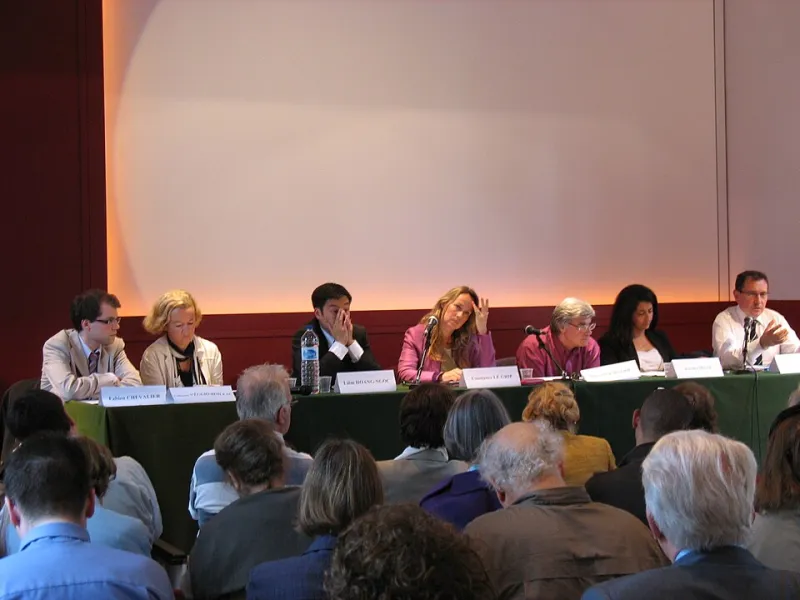
Photo: Sauvons l'Europe, CC BY-SA 3.0, via Wikimedia Commons
Everybody loves a first impression story. The overnight discovery, the right-place-right-time mythology, the unknown who walked into a room and blew the roof off on the first try. It's a great story. It's also, more often than not, not the real story.
For most performers — actors, singers, dancers, comedians — the moment that actually changed things wasn't the debut. It was the do-over. The callback. The second audition nobody really talks about because it doesn't fit neatly into the legend we prefer to tell about talent.
But here's what people in the room know that audiences usually don't: the callback is where the real work shows up.
What's Actually Happening the First Time
When a performer walks into an initial audition, they're managing a staggering number of variables simultaneously. There's the nerves, obviously. But there's also the complete unknown of the room — who's in it, what energy they're bringing, whether the casting director is on their third coffee or their first, whether the pianist is going to rush the tempo. You're performing while also doing reconnaissance, and that split attention costs you.
Psychologists who study performance anxiety talk about something called the "first exposure effect" — the idea that the first encounter with a high-stakes situation triggers a threat response that narrows your cognitive bandwidth. You're not at your most creative when you're in threat mode. You're in damage control mode.
The callback, by contrast, arrives with information. You know the room. You know roughly who you're performing for. You've already survived the first round, which — and this is not a small thing — means you know you belong there. That shift in internal framing changes everything about how a performer inhabits a piece.
The Gift of the Almost
There's a particular kind of performer who absolutely bombs their first audition for a role and then comes back to the callback and delivers something so different, so fully realized, that the people in the room sometimes can't reconcile the two experiences. Directors will say it out loud: "I almost didn't bring them back."
What happened in between? A lot, usually. The performer went home and sat with the material differently. They stopped trying to nail what they thought the room wanted and started figuring out what they actually believed about the character. They made choices instead of gestures. They stopped performing the idea of the role and started living inside it.
Failure — or at least the soft failure of not quite landing it the first time — functions like a diagnostic tool. It tells you exactly where your assumptions were wrong. And that's invaluable data if you're willing to use it instead of just feeling bad about it.
The Psychological Mechanics of a Second Shot
There's also something worth naming about the mental state that comes with a callback: it's lower stakes in the best possible way. Not because the opportunity matters less — it often matters more — but because the psychological weight of proving you deserve to be there has already been partially lifted.
You got the callback. They want to see you again. That fact, sitting in your chest before you even walk through the door, changes your posture, your breath, your willingness to take risks. Performers who've been through enough audition cycles will tell you that their best work almost always happens when they've stopped needing the room to validate them — and the callback, paradoxically, creates exactly that condition.
You've already been validated. Now you can just work.
When the Second Attempt Becomes the Defining One
Look at enough career timelines and you'll find this pattern everywhere. The actor who didn't get the first role but got brought back for something else and that's the one that launched everything. The singer who auditioned for a show, got cut in the first round, was asked back as a replacement, and ended up getting the reviews. The comedian who bombed a late-night set, got another shot six months later, and delivered the five minutes that got them a development deal.
These aren't consolation prize stories. They're the actual stories. The first attempt was necessary — not because it went well, but because it laid the groundwork for something better. The stumble was the setup.
What the performers in these situations share isn't luck, exactly. It's the willingness to treat the gap between attempts as working time rather than waiting time. They didn't just hope the second audition would go better. They figured out why the first one didn't, and they made specific adjustments. They showed up to the callback with a different understanding of the material, of themselves, of what the room was actually looking for.
What Directors and Casting Teams Actually See
Here's a perspective that doesn't get enough airtime: the people on the other side of the table often prefer the callback for reasons that have nothing to do with nerves or pressure. They're seeing who you are when you've had time to live with the work. They're seeing whether you can incorporate feedback, shift your approach, or deepen something you only skimmed the first time.
A callback is a collaboration test as much as a talent test. Can you take direction? Can you surprise us? Can you show us something we didn't see coming? Those are the questions a first audition rarely has the space to answer fully.
The performer who treats the callback as a second chance to do the same thing, only better, is missing the point. The ones who understand that the callback is a different conversation entirely — that's who tends to walk out with the part.
The Takeaway No One Puts on a Motivational Poster
We're pretty good, culturally, at celebrating the comeback narrative — the redemption arc, the underdog who keeps swinging. What we're less good at is honoring the unglamorous middle part: the going home, the sitting with the disappointment, the doing the actual work of figuring out what went wrong and why.
The callback story is really a story about that middle part. It's about what you do with the gap between the first no and the second shot. It's about whether you treat a stumble as information or as verdict.
For performers serious about their craft, the answer is always information. Always.
Because the room doesn't remember how you walked in the first time. It remembers what you did when you came back.