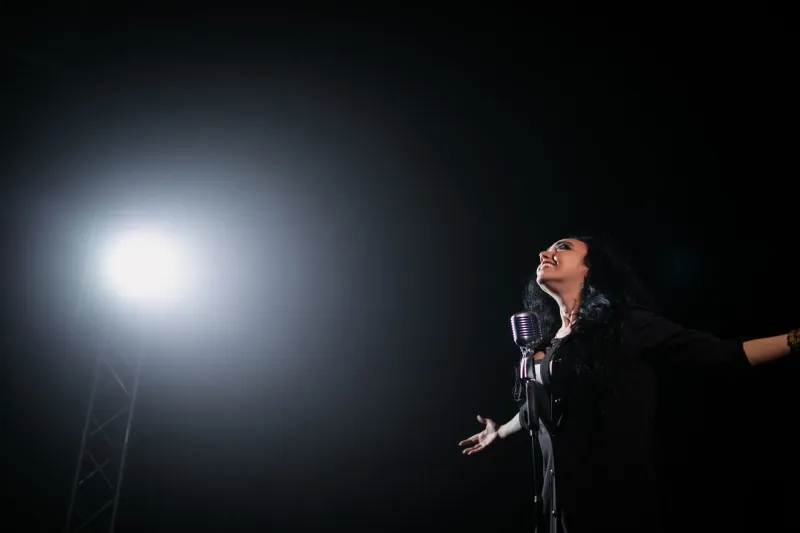
When the Curtain Calls and You Don't Answer: The Understudies Who Chose to Stay in the Wings

Photo: United States House of Representatives - From the Office of Greg Stanton, Public domain, via Wikimedia Commons
There's a version of the understudy story we all know. The lead sprains an ankle. The stage manager makes a panicked call. And suddenly, a performer who's been watching from the sidelines for months gets their shot — and absolutely nails it. Applause. Tears. Career launched.
But there's another version. One that doesn't get told nearly as often.
In that version, the call comes. The opportunity is real. And the understudy says no.
Not because they can't do it. Not because they're unprepared. But for reasons that go so much deeper than stage fright — reasons that, when you actually sit with them, reveal something honest and uncomfortable about what it means to want something in this industry.
The Myth of the Hungry Understudy
We've romanticized the understudy role to the point of mythology. Pop culture loves the narrative: the overlooked talent, biding their time, waiting for fate to hand them a microphone. It's the stuff of a hundred movies, a dozen Broadway legends, and more than a few reality TV competition arcs.
But that mythology flattens something complicated. Understudying isn't just about waiting. It's about watching. Closely, repeatedly, intimately. You learn a role not by inhabiting it but by absorbing someone else's version of it — their choices, their rhythms, their instincts. And somewhere in that process, things can get strange.
Some performers find, after months of that kind of study, that they don't actually want to perform the role. They want to understand it. That's a different thing entirely.
Loyalty That Goes Bone-Deep
One of the most underreported reasons understudies pass on their moment is loyalty — a kind of fierce, almost irrational attachment to the person they're covering.
Think about it. You spend a season watching someone perform a role night after night. You know when they're having an off night before the audience does. You know which scenes cost them the most. You start, in a weird way, to feel protective of their version of the character.
When that person gets sick or injured and the stage manager looks at you, some understudies feel less like they're getting an opportunity and more like they're being asked to take something that doesn't belong to them. The guilt of that — even when it's technically your job — can be enough to make someone suddenly discover a phantom sore throat of their own.
This isn't weakness. It's a form of artistic loyalty that the industry doesn't really have language for, because it runs counter to the hustle narrative everyone's supposed to be living.
The Fear of Becoming the Comparison
Here's a less flattering truth: some understudies avoid going on because they're terrified of being measured.
When you're the understudy, you're theoretically good. Potentially great. The audience doesn't know. The critics haven't weighed in. You exist in a kind of protected space of possibility.
The moment you step onstage, that changes. Now you're being compared — to the original, to the expectation, to the version of yourself people imagined. Some performers, particularly those who've built their self-worth around potential rather than proof, find that terrifying enough to walk away from.
It's not unlike the writer who keeps revising the manuscript and never submits it. Or the musician who records the album but won't release it. The unperformed performance is, in some ways, the safest performance. It can never disappoint anyone, including yourself.
Discovering You Don't Want What You Thought You Wanted
And then there's the quietest reason of all — the one that takes the most courage to admit.
Some understudies get to the edge of the spotlight and realize, in that specific moment, that they don't actually want it. Not this role. Not this night. Maybe not this at all.
That's a terrifying thing to discover when you've spent months — sometimes years — telling yourself and everyone around you that this is exactly what you're working toward. The understudy position, for many performers, is framed as a stepping stone. You're not here to stay in the wings. You're here to earn your way out of them.
But ambition isn't always linear, and people aren't always honest with themselves about what they're actually chasing. Sometimes the work of understudying — the observation, the analysis, the quiet craft of it — turns out to be the thing a performer actually loves. And the performance itself? That's someone else's dream they borrowed for a while.
What These Choices Actually Reveal
It would be easy to frame this as a story about fear. And sometimes that's exactly what it is. But writing off every understudy who steps back as someone who simply couldn't handle the pressure misses something real.
The choice not to go on — when it's a genuine choice and not just avoidance dressed up as humility — can be one of the most self-aware things a performer ever does. It requires you to look clearly at what you want, what you're willing to sacrifice, and whether the story you've been telling yourself about your own ambition is actually true.
In an industry that rewards relentless forward motion, that kind of pause is almost radical.
There's also something worth sitting with about what these moments reveal to the performers who do push through the discomfort and go on. Because the decision isn't always clean. Some understudies who initially resist eventually step up — and discover that the fear was the point, that breaking through it changed something in them permanently. Others go on, do the job, and feel nothing they expected to feel. Both outcomes tell you something.
The Version of Success Nobody Talks About
Maybe the most honest thing the understudy's dilemma exposes is how narrow our definition of success in performance tends to be. We measure it in curtain calls and credits and career trajectories. We celebrate the performer who takes the shot.
But there's a kind of integrity in knowing yourself well enough to recognize when a shot isn't yours to take — or when taking it would cost something you're not willing to pay. That's not failure. That's clarity.
And clarity, in this industry, is rarer and more valuable than almost any curtain call.
The wings aren't always where people go when they're not ready. Sometimes they're where people go when they finally, quietly, figure out who they are.