Thank You for Booing: How the Worst Nights Onstage Built the Best Performers

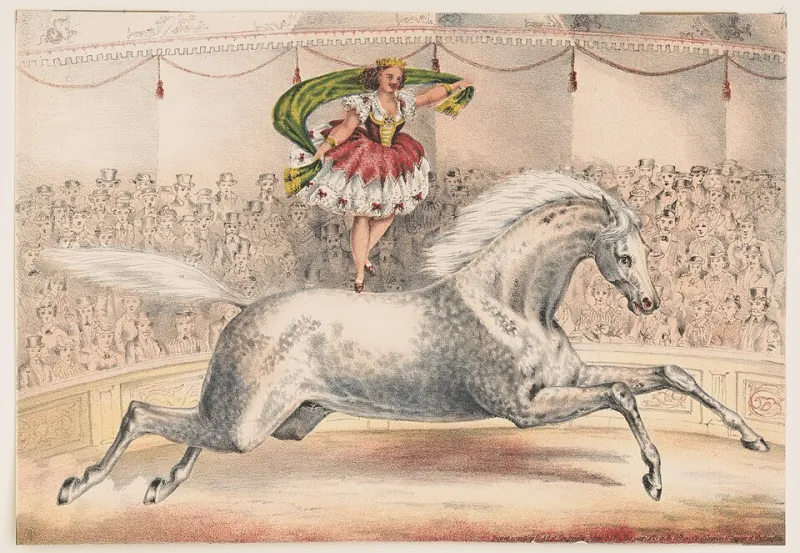
Photo: White, Public domain, via Wikimedia Commons
Let's talk about the bad nights.
Not the mildly awkward ones — the shows where the energy was a little flat or the tech had some hiccups. The genuinely awful ones. The night someone walked out mid-set. The review that felt less like criticism and more like a verdict. The audience that didn't laugh, didn't clap, didn't respond in any of the ways you'd rehearsed for in your head. The performance that made you seriously reconsider whether you were in the right line of work.
Those nights don't make it into the highlight reel. But they might be doing more for your career than the good ones ever could.
The Information Nobody Wants to Receive
Here's the thing about success: it's validating, but it's not particularly instructive.
When a performance lands — when the crowd is with you, when the reviews come in warm, when you walk offstage knowing it worked — there's not a lot of productive data in that experience. You feel great. You want more of it. But you don't necessarily learn why it worked, and you definitely don't get a clear picture of where the gaps still are.
Resistance, on the other hand, is incredibly specific.
A cold audience tells you something. A frustrated critic tells you something. Even a heckler — that most dreaded of live performance interruptions — is giving you information that a standing ovation simply cannot. The question is whether you're in a headspace to actually receive it, or whether the sting of the moment shuts you down before the lesson can get through.
Most performers, early in their careers, go with option two. And honestly, that's understandable. Nobody learns to take a punch on the first swing.
What Negative Feedback Actually Sounds Like
It's worth making a distinction here, because not all criticism is created equal.
There's feedback that's specific and grounded — the kind that points to a real gap between what you intended and what the audience experienced. A director who tells you that your second act loses momentum in a particular scene. A reviewer who notes that your character's emotional arc isn't tracking for people who don't already share your frame of reference. An audience member who tells you, sometimes bluntly, that they couldn't connect with the material. That kind of feedback is hard to hear, but it's workable. It gives you something to push against.
Then there's the noise — the criticism that says more about the person delivering it than the work itself. The review that's clearly punching at something other than the performance. The online comment that has nothing constructive in it. Learning to tell the difference between these two categories is, genuinely, one of the more valuable skills a performer can develop. Not because you want to dismiss feedback, but because you want to be able to use the right kind without drowning in the wrong kind.
The performers who get good at this tend to develop a kind of radar for useful resistance. They stop hearing criticism as a verdict on their worth and start hearing it as data about their impact — which is a completely different thing.
The Heckler as Unlikely Teacher
Few experiences in live performance are as immediately destabilizing as the heckler. Someone in the audience decides to make themselves part of the show, and suddenly you're managing something you didn't rehearse for, in real time, in front of everyone.
For a lot of performers, especially newer ones, the heckler is pure threat. The goal becomes survival: get through the moment, regain control, move on.
But comics, in particular, have long understood that the heckler is also an opportunity — not just to demonstrate quick thinking, but to discover something about where the performance has gaps. Hecklers rarely show up during the parts of a set that are working. They surface when the audience's attention has started to drift, when the energy in the room has dropped enough that someone feels comfortable filling it with their own noise. In that sense, the heckler is a symptom, not the disease. They're pointing at something.
The same logic applies across performance disciplines. The moment when an audience starts to disengage — when the restlessness becomes audible, when the energy shifts — is the moment that tells you the most about where your work still has room to grow.
When the Critics Got It Right (Even When It Hurt)
There's a specific kind of review that performers sometimes describe years later as the one that changed everything. Not the rave that launched a career, but the takedown that forced a reckoning.
The pattern tends to look like this: a performer gets a piece of criticism that initially feels unfair, even cruel. They dismiss it, defend themselves internally, maybe vent about it to people they trust. And then, weeks or months later — sometimes longer — something shifts. They revisit the work with a little more distance, and they start to see what the critic was pointing at. Not the way it was framed, maybe, but the underlying truth of it.
That delayed recognition is where a lot of significant artistic growth happens. The criticism does its work slowly, underneath the surface, in a way that the immediate sting doesn't allow you to notice.
This isn't an argument for seeking out harsh critics or treating negative feedback as inherently more valuable than positive feedback. It's an argument for staying open long enough to let the useful parts of criticism do their job — even when your first instinct is to slam the door on it.
Building Resilience That Actually Means Something
The entertainment industry talks a lot about resilience. Develop a thick skin. Don't let the bad reviews get to you. Keep going no matter what.
That advice isn't wrong, exactly, but it's incomplete. Because the goal isn't to become someone who can't be touched by criticism. The goal is to become someone who can be touched by it — who can actually feel the impact of resistance and pushback — and still do something useful with that feeling rather than shutting down.
That's a much harder thing to build. It requires a kind of security in your own artistic identity that makes it possible to hear hard things without those hard things destroying you. It requires separating your worth as a person from the reception of any single piece of work. And it requires a genuine belief that the gap between where you are and where you want to be is something worth exploring, not something to be ashamed of.
The performers who get there — who build that kind of grounded resilience — are the ones who tend to look back on their worst nights with something that isn't quite gratitude, but isn't quite far from it either.
The bad nights built them. And they know it.