After the Exit: How Some Artists Do Their Realest Work Once the Industry Stops Watching
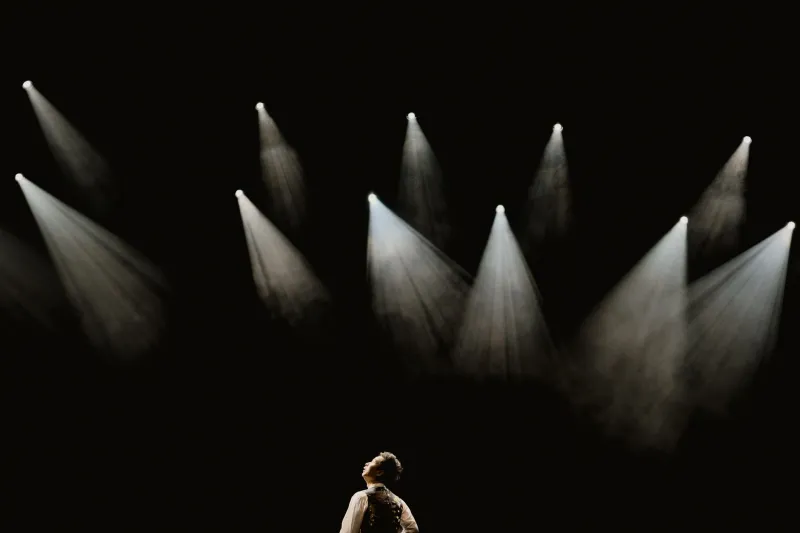
There's a version of the performer's story that ends cleanly. The curtain comes down. The headshots get retired. Maybe there's a going-away party, or at least a last gig that everyone agrees felt like a natural stopping point. And then — supposedly — that's it.
Except it's usually not.
For a lot of artists, the work that defines them doesn't happen under stage lights or in front of a camera. It happens after. In community centers and church basements. In one-on-one conversations with younger performers who are terrified and need someone who's been through it. In mediums they never would have tried if the industry had kept saying yes.
The exit, it turns out, can be a beginning wearing a very convincing disguise.
What the Business Actually Does to Your Voice
Here's something that doesn't get talked about enough: the professional performance world, for all its brilliance, has a way of narrowing you. You figure out what gets cast. You learn which version of yourself books the room. You sand down the weird edges because weird edges don't always fit the project, and you need the project.
None of that is cynical, exactly. It's just how the machinery works. But over time, the machinery can start to feel like the whole story.
When someone leaves — voluntarily or otherwise — there's often a period of grief that looks a lot like loss but is actually something more complicated. Because underneath the grief, there's frequently a question that's been waiting a long time to get asked: What would I make if nobody was deciding whether it was sellable?
That question, once it surfaces, tends to be pretty hard to ignore.
The Mentor Who Became the Artist They Couldn't Be Before
Take the performer who spent two decades working steadily — regional theater, a few TV credits, national touring productions — and then quietly stepped back in her early fifties when the work started drying up the way it does for women of a certain age in this industry. She didn't make an announcement. She just stopped pursuing it.
What she started doing instead was teaching, almost by accident, at a community theater program in her mid-sized Ohio city. Not a prestigious conservatory. Not a place where anyone was being discovered. Just a space where people between the ages of sixteen and seventy-five were trying to figure out how to be expressive human beings.
She'll tell you now that the work she did in that room — the real, unscripted, unrepeatable work of helping someone access something true in themselves — was more demanding than anything she performed professionally. And more satisfying. The absence of an audience evaluating her freed her to be fully present for someone else's process in a way she'd never quite managed when her own career was the thing at stake.
Her students didn't know her credits. They just knew she could see them. That turned out to be the most valuable thing she had.
When the Medium Changes Everything
Some artists don't find their truest voice in mentorship — they find it by stumbling into a form they never trained for and realizing, with some combination of terror and relief, that this is actually what they were supposed to be doing.
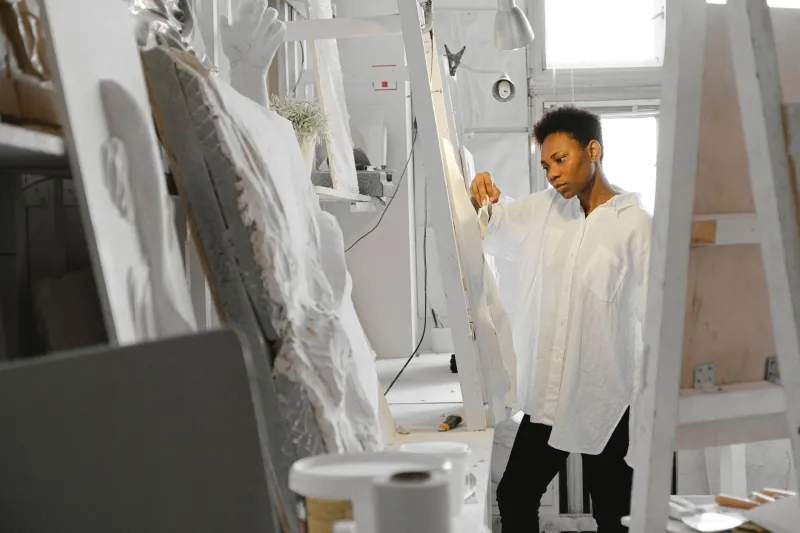
A classically trained dancer who spent years in professional companies before a series of injuries forced her out didn't become a choreographer or a teacher. She became a visual artist. She started making large-scale textile pieces that documented movement — not as illustration, but as a kind of physical record of what her body had learned over thirty years.
The dance world didn't know what to make of her work at first. The art world wasn't sure either. But audiences who encountered her installations reported something that sounded a lot like what people describe after a great live performance: the feeling of being reached.
She wasn't performing anymore. But something in the work was still doing what performance does at its best — making contact.
The Pressure That Was Also a Lid
It's worth sitting with why the exit is sometimes what unlocks things. And it has a lot to do with pressure — specifically, the pressure of being evaluated in real time.
Professional performance is a constant feedback loop. Auditions, reviews, box office, social metrics, industry reputation. That loop creates incredible discipline and craft. It also creates a kind of self-surveillance that never fully turns off. You're always, on some level, watching yourself be watched.
When that loop goes quiet — when there's no one keeping score — some artists discover they've been holding their breath for years. And what comes out when they finally exhale is sometimes the strangest, most personal, most unapologetically specific work of their lives.
The painter who spent years doing commercial illustration. The singer who shifted to audio storytelling podcasts nobody asked her to make. The stand-up comic who started writing essays that were funnier and more devastating than his best tight five. These aren't failure stories. They're stories about what gets possible when the stakes change shape.
The Audience That Was Always There
One of the quiet ironies in all of this is that the work artists do after stepping away from traditional performance often finds a real audience — just not the kind the industry was designed to deliver.
A retired Broadway performer who started hosting dinner parties where she'd perform original monologues for groups of twelve people in her Brooklyn apartment wasn't chasing scale. She was chasing something more like intimacy. But word spread. A waiting list formed. People drove hours for a seat at her table.
The industry would have called that a niche. She called it the first time she felt like what she was making was actually landing.
That's the thing about an encore nobody expects — it doesn't always happen on a stage. Sometimes it happens in a living room, or a school gym, or a gallery, or a voice memo someone records for themselves at two in the morning and eventually shares with the world.
What the Exit Actually Teaches
If there's something worth taking from all of this, it's probably not a lesson so much as a question to keep close: Is the structure I'm working inside helping me make the work, or is it quietly deciding what the work is allowed to be?
That's not an argument against professional performance or the industry that surrounds it. That world produces extraordinary things. But it's worth knowing the difference between discipline and confinement — and knowing that sometimes the most honest answer to that question only becomes clear once you're standing outside the building.
The artists who do their greatest work after they've already left? They didn't plan it that way. But most of them will tell you they're not surprised it happened. Something in them always knew there was more to say. They just needed the exit to find the door.