Late Bloomer, Louder Bloom: What Happens When the World Finally Catches Up to Your Work
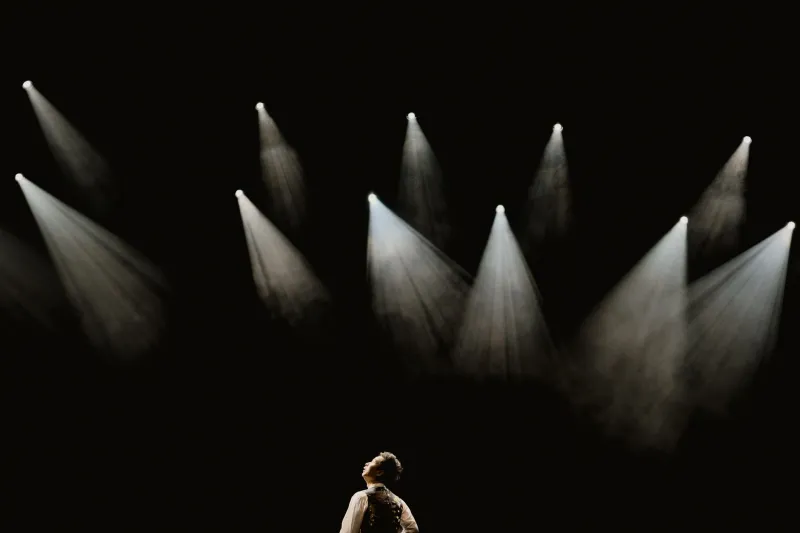
There's a particular kind of grief that performers don't talk about enough — the quiet one that settles in after you've decided you're done. Not fired, not failed in any dramatic way. Just done. You put the work down, made peace with what it gave you, and moved on to whatever comes next. And then, sometimes years later, the phone rings. Or a clip goes viral. Or a director who wasn't born yet when you recorded that album finally tracks you down.
The world caught up. And now you have to figure out what to do with that.
The Decision to Stop Is Never Really Final
Most performers who experience a late breakthrough will tell you the same thing: they didn't actually quit so much as they exhaled. The constant hustle, the auditions, the waiting — at some point, the body just stops holding its breath. They stepped back. They taught, or drove, or raised kids, or opened a small business. They kept living, which is its own kind of creative act.
But the work they made? That didn't stop moving.
Art doesn't observe the same timelines we do. A song recorded in a cramped studio in 1987 can find its perfect listener in 2024 through a fifteen-second video clip. A novel that sold three thousand copies on release can be rediscovered by a book club, a podcast, a single influential reader with a large following. The piece doesn't know it was supposed to be finished with its run. It just keeps traveling.
For performers who spent years trying to manufacture that connection — the right room, the right night, the right audience — there's something almost absurd about the idea that it happened when they weren't even looking.
Timing Is a Character in Every Career
We talk a lot about talent and preparation in the performance world. We talk less honestly about timing, maybe because it feels like admitting that something outside our control matters just as much as everything inside it. But it does. It always has.
Think about the actors who were too specific for their era — the ones whose intensity or strangeness didn't fit the mold of what was commercially viable in their moment, but who would've been celebrated had they come up a decade later. Or the musicians whose sound arrived just before the culture was ready for it, who watched a younger artist with a similar approach blow up and felt something complicated about that. Not quite bitterness, not quite pride. Something in between.
Timing isn't luck, exactly. It's more like weather. You can't control it, but you can learn to read it — and more importantly, you can learn not to let a bad season convince you that summer isn't coming.
What the Waiting Actually Does to You
Here's the part that doesn't get romanticized enough: the years between the work and the recognition aren't wasted. They're doing something.
Performers who come back to their art after a long absence — or who suddenly find themselves in demand after a quiet decade — often describe a strange clarity. They're no longer performing for the approval they once desperately needed. The hunger is still there, but it's cleaner. They know themselves better. They've lived more of the material.
There's a reason that some of the most compelling late-career performances feel so unguarded. The performer has already survived the thing they were most afraid of — irrelevance, obscurity, being forgotten — and they're still standing. That survival rewrites what they're willing to risk onstage.
And honestly? Audiences feel that. There's a texture to someone who's been through something and kept going. It reads differently than youth and ambition, and it doesn't read as lesser. It reads as earned.
The Complicated Gift of Rediscovery
Not everyone experiences a late breakthrough as purely joyful, and it's worth being honest about that. There can be grief mixed in — for the version of yourself who needed this twenty years ago and didn't get it. For the relationships that frayed under the financial pressure of a career that wasn't paying off. For the choices you made when you believed the window had closed.
Some performers also grapple with a strange dislocation: the work being celebrated isn't always the work they'd create now. They've grown. They've changed. And suddenly they're being asked to represent a self they've already moved past, to perform a version of their art that feels like a time capsule.
That's a real tension. The invitation to step back into the spotlight comes with an unspoken question: which version of you is showing up?
The most interesting answer, usually, is both. The person who made the original work and the person who survived its silence.
What This Teaches the Rest of Us
If you're in the middle of your career right now — grinding, auditioning, creating, wondering whether any of it is landing — the late bloomer's story is genuinely useful, not just as inspiration but as instruction.
First: make the work anyway. Not for the immediate audience, not for the algorithm, not for the review that may or may not come. Make it because it's yours and because the act of making it changes you regardless of whether anyone else ever sees it.
Second: let go of the timeline. I know that's easier said than done when you're watching people younger than you get opportunities that feel like they should've been yours. But the timeline you imagined for yourself was always fictional. The real one is still being written.
Third: don't confuse silence with rejection. Sometimes the world isn't saying no. Sometimes it's just not ready yet. There's a meaningful difference, and learning to hold that distinction — without using it as an excuse to avoid honest self-assessment — is one of the harder skills in any creative life.
The Encore That Changes Everything
The performers who handle late breakthroughs with the most grace tend to share one quality: they never fully stopped caring about the work itself, even when they stopped expecting it to reward them. They stayed curious. They kept creating in some form, even if it was smaller, quieter, less visible than before.
That continuity matters. It means that when the world finally arrives at their door, they have something real to offer — not a performance of their former self, but an actual self, deepened by everything the waiting required.
So if you've taken what felt like a final bow, or if you're watching someone else's clock and wondering why yours seems to be running slow — consider that the encore nobody expected might be exactly the one that means the most. Not because it validates the years of struggle, but because it arrives when you're finally ready to receive it.
And that kind of readiness? You can't manufacture it. You can only live your way into it.